The thesis of this film is that people will do whatever it takes to survive, especially under conditions of war.This film is about a young boy who, even though he is Jewish, is able to pass as German because he speaks the language and is very familiar with the culture.This young man is named Solomon in the film and is very lucky because he has the perfect mixture of talents to survive his circumstances.Even though Solomon is of Jewish decent he decides to lie to the Nazis and claim that he is of German descent and doesn’t know where his parents are.He is then recruited to become a Nazi and is put in many awkward situations where he comes very close to being discovered.It is almost comical the way he has to create lies and has the good luck of not being turned in even after he is discovered to indeed be Jewish because he is circumcised.During the Second World War, the Nazis targeted Jews as a specific group to eliminate.The man behind most of this German supremacy ideas was Adolf Hitler wh0 was a Nazi leader.The film Europa, Europa showed how WWII was a war against civilians like Solomon.“Everyone was a target in WWII, and the war killed far more civilians than soldiers as government took actions against “radical enemies,” people with different social cultural, and religious beliefs, and those who dissented from a particular ideological line.” (332, Smith)Another film that re-enacted the Holocaust is Michael Verhoeven’s “The Nasty Girl” (1990).Like Europa, Europa, Nasty girl only focused on a small part of the Holocaust.“The two most prominent Holocaust films to have come out of Germany in the last decade are Michael Verholven’s The Nasty Girl and Agnieszka Holland’s Europa, Europa because in real life Solomon is a very ordinary looking man, but in the film he was portrayed as a pretty boy who everyone adored.This film did not do very well in its native Germany when it was released because of its sensitive subject matter and political viewpoint.Audiences did not know who to sympathize with.However, in the U.S. Europa, Europa did very well and won a Golden Globe and Oscar nomination for best adapted screenplay.
Stars: Etienne Becker, Jean Negroni, Helen Chatelain
This is an abstract film shown in an apocalyptic style, written in a way which prophesizes a cataclysm in which evil forces are destroyed. The main character in this film is a man who is a prisoner and is being experimented on. He is injected with drugs and forced to travel through time where he visits the past, present, and future; including the events following a fictional World War III. His objective is to replenish the food supply, medicine and energy. However, he is attached and obsessed with a woman whom he desires to be with instead of following futuristic people to their planet. His choice to return to his childhood results in him being transported to an airport where he witnesses his own death. What makes this film interesting is the way it was created; a series of narrated pictures dubbed with music. “Identified as a photo-roman, a photopraph-fiction, a term that readily evokes its complex narrative strategies. The visual track consists primarily of still photos connected by straight cuts, fades, and dissolves, the editing rhythms and the variations in camera position are so like those in conventional moving pictures that the spectator may feel s/he is watching a movie rather than a comic book.” (15, Kawin)
This is an experimental film that is also a short because it is only 28 minutes long. The scenes of the airport and museum are shot in France. One of the most memorable scenes is when the man is in the museum with his lover surrounded by preserved dead animals. These animals can be seen as metaphors for many different things; some which include the people that died in the war and the memory of this couple’s primal love. The thesis of this film is “one cannot escape form time.” This film explores with the concept of time and how the prisoner goes back and forth experiencing events in both the past and future. “Time is often described in this film as a series of waves, it is significant that La Jete can also mean breakwater, something that extends or projects into the sea.” (16, Kawin) The thesis of this film is that you cannot escape time and that it is intertwined with your life. The scene in the museum also suggests that time is in a state of stasis; with the statues, animals, and pictures that donot move- suggesting that this relationship, like the objects are dead. Metaphors can be used in film as a powerful visual media concept.
Even though this is a hypothetical movie of fictional events instead of historical events, this film does touch upon the post-war era by showing scenes of a destroyed and dilapidated future after the war. This type of environment after a war is very expected and possible. “The chaos after the Second World War differed from the chaos after World War I. Real shortages and physical destruction were more pervasive, and continental Europe was occupied by the victorious armies, not by freelance soldiers like those who had refused to demobilize after World War I.” (397, Smith)
(scene where boys are being sold a bill of goods and dreaming of being heros)
All quiet on the western front is a Hollywood feature dramatic film about WWI and the experiences of a group of young college boys as they get recruited and fight during the war. The film takes on an anti-war perspective as the boys are shown being sold a bunch of romanticized ideals by their school teacher and country who mention words like “honor,” “courage,” “service,” and “duty.” However the young boys quickly realize that war is not a pleasant experience but full of horror and death. The thesis of this film is that young boys and men are sold "a bill of goods" to influence them to serve in the war, however are quickly awakened by the traumatic experiences of war. This film is based on the novel written by Erich Remarque and story is condensed to fit into the time limitations of film. "Without the enormous amount of invention, condensation, and compression undertaken by even the most accurate attempt at film, the historical would not be dramatic, but a loose, sprawling form far less able to make the past interesting, comprehensible, and meaningful." (38, Rosenstone) The author of the book describes it as, "This book is to be neither an accusation nor a confession, and least of all an adventure, for death is not an adventure to those who stand face to face with it. It will try simply to tell of a generation of men who, even though they may have escaped shells, were destroyed by the war." (3, Ramarque)
Even though, All Quiet on the Western Front is a main stream historical drama, it was very controversial because it was an anti-war film when the concept of war was still very celebrated in the world. This was an innovative film; a Hollywood “conventions, and practices, such works created to contest the seamless stories of heroes and victims that make up the mainstream feature.” (50, Rosenstone) War films were becoming very popular. “By 1930, the Great War had been the topic of seventeen German motion pictures.” (180, Imhoof) As soon as the film was released, there were protests especially in Germany where people released rats in the theatre to deter viewers. This film led to discussions which facilitated a type of culture and solidarity that actually benefited Hitler and his movement. “Indeed, discussions surrounding these two films in Gottengen helped normalize ideas about culture and national identity that directly benefited Hitler’s movement. (176, Imhoof) Hitler used the powerful medium of film to help reach the masses to promote his causes as a type of propaganda tool as an innovative film. “What follows in this chapter is not only an examination of how a particular Innovative film crates the world of the past and makes a historical argument, it is also meant as an extended demonstration of something alluded to in the past chapter- how a historical both relates and adds to the discourse of history out of which it comes and to which it of necessity refers.” (51, Rosenstone) “Just as governments used propaganda and censorship to boost morale and curtail criticism of the war, so too did they seek to control and coordinate the economic activities of the entire society to meet the needs of prolonged industrial warfare.” (143, Smith) There were specific goals for propaganda. “The aim of propaganda was twofold: to instill patriotism and loyalty in the citizenry at home and to foster hatred for the enemy’s culture and society.” (142, Smith)
During WWI the new techniques of trench warfare was utilized. This is when opposing sides dug trenches for themselves and created their fighting scene with craters and bob wire that was usually lined out at night. Each opposing side would attack each other and advance attempting to further their territory. This style of fighting proved futile and unsuccessful as the soldiers quickly became shell shocked and driven crazy. There were many scenes in the film where the boys couldn’t take the experience of war. For example, the scene when the young soldier runs out of the trench because he cannot take the sheer booming sound of the constant bombing and gets injured as he runs out of the barracks. This shows the extremely unpleasant conditions that the trench warfare produced.
There was a real life armisance/ a cease fire, during the Great War on Christmas in 1914. During this time both sides stopped fighting and were actually allowed to fratizize. I can imagine how hard it must have been to commence fighting after you broke bread and ate with someone you are supposed to kill. There was a scene in the film that showed this type of “The Enemy as Comrades” especially in the last scene of the film. In this scene, Paul helps nurse a French soldier who he had injured.
There were also many new inventions and military technology that made war combats more challenging. For instance, there were machine guns, mustard gas, and new strategies that were supposed to replace the old style of war. “Out dated military concepts guided both sides. Officers believed in a cult of the offensive and which spirited attacks and high troop morale would be decisive. Despite the availability of new, powerful war technology, such as more deadly artillery. An old-fashioned vision of warfare persisted, and officers were unwilling to abandon their sabers, lances, and bayonets.” (Smith, 132)
Another scene that showed the horrors of war was when the boys didn’t have enough food to eat. They joined with the group of older more seasoned soldiers who wouldn’t accept money for their share of food. This scene showed how quickly money lost its trading value during war. What was more valued instead was bartering goods for goods; like cigarettes, boots, and weapons. The exchange of boots was used as a metaphor in the film. The boots were linked to death. It seemed like anyone who wore those boots which were originally owned by the young boy who ran out of the barracks and eventually died, were cursed. What made it ironic is that soldier who got those boots was always at first so very happy to be getting a pair of comfortable shoes, however, the happiness quickly wore off as they died.
The anti-war sentiment was shown most strongly in the scene where Paul injures a French soldier, but quickly becomes remorseful and tries to nurse him back to health in order to somehow make peace with him before he dies. This film is one of the first films in history that used the dark side of war as an influencing medium through media in attempt to change attitudes of the masses. This film was successful at exposing war for the horrible thing that it is and was significant because it was made before Hitler came into power. As a result, strong oppositional actions were taken by the German people in attempt to pull and sabotage this film’s success. For example, it is recorded that some German soldiers would go into the movie theater where this film debuted and let out a bunch of rats to vacate movie goers from seeing its content. Despite these antics, All Quiet on the Western Front won Best Picture Oscar in 1930 and best director award.
Production Company: Nouvelles Editions de Films (NEF)
The Rules of the Game is a French feature film directed by Jean Renoir. This film takes a scrutinizing look at the upper class and their social and economic life. Many aspects of lifestyle, relationship, attitudes, and activities of leisure are exposed. Compared to the poorer, less privileged classes. These characters are shown to be fickle, flaky, and un-loyal to each other. This film begins as a pilot named, Andre Juriew returns from setting a flight record. There is a party for him at the house of a wealthy aristocrat, Robert de la Cheyniest. Andre is in love with Mr. Cheynist’s wife, Christine. Mr. Cheynist is having an affair with Genevive de Marras and is shown in the film trying to break it off. These affairs lead to a type of complicated love triangle that leads Christine to consider her options in other men as she realizes about her husband’s affair. Christine is shown in a scene where she encourages Genevive to stay and entertain her husband when she prepares to leave the house saying, “We should help each other out.” To me, this is a desperate action taken by Christine out of fear of losing her position as Robert’s wife. This film exposes the liaise faire attitude the rich French had toward relationships and marriage. Unlike their strict American counterparts who usually marry and have clear rules against infidelity and adultery. The sexual freeness among the men causes the women much anxiety because their position and status is not guaranteed if the men cheat and fall in and out of love so easily. The thesis of this film is that the bourgeoise and proletariat had two distinctive definitions of love. "Proletarian ideology cannot accept exclusiveness and "all-embracing love." The proletariat is not filled with horror and moral indignation at the man forms of facets of 'winged Eros' in the way that the hypocritical bourgeoisie is; on the contrary, it tries to direct these emotions, which it sees as the result of complex social circumstances, into channels which are advantageous to the class during the struggle for and the construction of communist society." (236, Smith) These are two types of love; bourgeoisie love and proletariat love. The film, Rules of the Game displays proletariat love. “The bourgeoisie was well aware of this, and in attempt to create a stable family bourgeoisie ideology erected “married love” as a moral virtue; to be a “good family man” was, in the eyes of the bourgeoisie, an important and valuable quality. What is the proletariat’s idea of love? Each class tries to fill the conception of love with a moral content that suits its own interests.” These types of relationships shown in Rules of the Game were not love, but instead people not in touch with their real feelings or who they really were, but instead, earthly pursuits of status, power, appearances and prestige; a type of perversion. “This deviation towards unhealthy carnality takes relationships far from their source in the biological instinct. On the other hand, over the centuries and with the changes in human social life and culture; a web of emotional and intellectual experience has come to surround the physical attraction of the sexes.” (236, Smith) Other rules that were exposed in this film were rules of social class. In the scene were a newly hired servant sits at the table where they were all eating showed that he could not sit next to Christne or Robert because of his low class status, eventhough he was once a business owner and did very well economically before the start of the war.
This film was made about a time in history before French women were liberated. They were very dependent on men to define who they were. Women were not allowed to be breadwinners or the main income providers which would have freed them from being sexual muses for men. Back then, a woman’s sexuality was all she had and her goal to survival was to marry rich. The men in this film are seen as relying on their wealth and social position for power. During this time before WWII, men had a lot of anxieties because they feared of losing that power which allowed them to control women. Some of the reasons why the bourgeoisie wanted to hold onto their lifestyle so much. People wanted to escape into pleasure seeking and “the good life,” especially after suffering through the First World War. “The 1920’s were years when many people, like Virginia Woolf, craved peace and hoped to distance themselves from Europe’s legacy of destruction.” (187, Smith)
French men during this period of the 1930’s were full of anxieties as their masculinity was becoming threatened and challenged by other countries who had more aggressive and “manly” rulers. “Also in 1922, Benito Mussolini came to power in Italy with the help of his fascist bands of Black Shirts. His intention was to restore manly vigor and the mighty Roman Empire through war and conquest.” (188, Smith) Rules of the game exposed these many insecurities so much that it made French people feel anxiety and pull the film from theatres. “Rules of the Game exacerbated anxieties, and its confrontation with audiences was powerful and uncompromising, prompting French viewers to excoriate the film” (26, Bates) During the 1930 is France, a new genre called 'poetic realism' was created by Jacques Feyder. Poetic realism is recreated realism, stylised and studio bound, rather than approaching the soci-realism of the documentary. This style usually has a fatalistic view of life with characters living on the margins of society, either as unemployed members of the working class or as criminals. Rules of the game is a part of this poetic realism style which showed how people were living their personal lives among both the rich and the servants in France. (56, Rene) This film can also be categorized under the description of 'innovative drama.' "Yet another kind of film rarely, if ever made in America, has also been attempted abroad- something I labelled in the first chapter the experimental or innovative history film." (50, Rosenstone)
The scene showing Robert having an affair with Genevive and then attempting to quickly and abruptly cut the relationship off when they are out shooting on the hunting field. Christine is unaware of the affair until she happened to look in her husband’s direction with a pair of binoculars on the outdoor shooting course. The two women are portrayed as good and bad; Christine is the pure white countess and Genevive is the rifle woman. “On the positive side were inspirational and pure white countesses, combinations of grand lady, mother, and nurse. On the negative side were working- class rifle women who inspired the masses and who were often both violent and sexually lascivious.” (26, Bates)
Production Company: Compagnia Cinematografica Champion
This film entitled, WWI: Two Women, is a film that was made in 1960 which starred Sophia Loren was written by Alverto Moravia and directed by Vittovio De Sica. This film is about a worldly business woman from Rome (Cesira) who is forced to vacate her home and travel to a small village in Italy where she was born to take refuge during the Second World War. Cesira travels with her thirteen year old daughter, Rosetta. The film uses many symbols and metaphors to incorporate meanings of what kind of relationship the war had on people and society. “In La Ciociara, Moravia provides omens and premonitions throughout the narrative to prepare the reader for the tragedies to come for the mother and daughter protagonists, Cesira and Rosetta.” (Kozma-Southall, 208) During this modernism era, film was used to portray ideas in visual mediums that can reach more of the human senses than merely reading a book. “Some elements of that special language that is metaphorical and symbolic, a language that creates a series of proximate or possible realties rather than a reality that is literally true- through it also does intersect with the literal. (Rosenstone, 48) This film can be categorized under the description of 'innovative drama' because it deals with the subject of everyday people during the war. "The directors of these innovative works are often leftists or revolutionary sympathizers, people who find not just the stories but the form of the mainstream film to be suffused with individualist, capitalist values which as people working for change, they wish to combat." (50, Rosenstone)
During the film, the two contrasting personalities of the mother and daughter are clearly displayed. Cesira is a bold, fearless, assertive, and worldly woman which is represented in both the book and the film as a goat figure. Rosetta, on the other hand, is naïve, young, innocent, blameless, pure; like a lamb. These metaphors are shown in the film during several scenes. In the scene where Rosetta and Cesira exit the train, the daughter follows everything the mother does. When Cesira puts her suitcase on her head, Rosetta quickly mimics and follows. There is a scene where the village is shown scavenging through the hillside. This scene is very similar to the way animals graze for food and can be seen as a metaphor to goats/ sheep/ and lamb- animals grazing. Like the goat, these people will eat anything they can find digestible. This metaphor is also used as foreshowing the future of events in the film and predicts something unpleasant is about to happen to Rosetta. Just as in the bible and other secular belief systems, the lamb is representative of sacrifice. Eventually the mere mention of “lambness” or “goatness” becomes a literary shorthand telling the reader that something regarding Rosetta is about to happen- the gang rape she suffers. This rape is also used to symbolize something much bigger regarding the war. Often countries are referred to as “the mother country.” This mother and daughter metaphor is also comparable to Cesira and Rosetta in the film; because of the actions of the mother countries being at war, the people have suffered. The rape is symbolic of the country and people suffering.
The style that the film, WWII: Two Women, takes is neorealism. Neorealism is a genre that defines itself very differently from Hollywood films. Neorealism is the perspective of everyday, ordinary people and are portrayed. Another concept that is focused on in this film is Solidarity. “Solidarity is not only an awareness of common interests; it depends also on intellectual and emotional ties linking the members of the collective.” (235, Smith) This solidarity is shown in the film by showing all of the many struggles and hardships Cesira and Rosetta suffer. During this time in history after Mussolini was captured, Europe was left being devastated in every way. The land was destroyed; the people were hurting for resources, food, and work. “Economic difficulties plagued Europe and after World War I. Many people were thrown out of work by the swift reduction of military need, and some countries such as Britain never returned to robust employment.” (257, Smith)
During this time, there was a rise in Fascism in Italy. The Fascism in Italy did not have anti-sematic elements. “Under the guise of militant nationalism, the Fascist government of Mussolini that came to power in 1922 prompted state violence as an end in itself. In claiming to create a utopia, it papered over the problems of modern life. After years of wartime deprivation, citizens flocked to leaders who promised them a rapid end to their suffering through a victorious state.” (222, Smith) The Fascists were portrayed in the film as two men going around looking for men and boys to force to fight for Italy in the War. The film, however did not focus on Fascists and did not dedicate many scenes to it. The character, Michele, was a unique symbol in the film and was used as the voice of reason. He was shown as a good, God fearing man who was very educated and wanted the common people to take over the world and saw the city dwelling people as “bad” and impure.
The thesis of this film is that war drastically effected the way civilians, especially women had to adapt to survive. Conditions of war often hurt civilians by displacing them from the home, separating them from the men, and be openly vulnerable for sexual attack. This was shown as these two women struggled to survive, being displaced from their home and eventually victims of gang rape. These types of experiences were very common among women during and after the war. "Adding to the trauma of everyday life the army rampaged through southeaster, eastern, and central Europe during 1945, even after the war's end; looting and raping occurred everywhere but with particular brutality in Hungary and Germany. Their own country devastated by the German invasion and their own families destroyed. Soviet soldiers raped and gang raped any females between the ages of 10 and eighty." (401, Smith) In one of the first scenes, the mother Cesira sleeps with the butcher to obtain money she needs for her journey. This scene shows how women were forced to do whatever they could to get resources they needed to survive the war. "Meanwhile, in Western Europe a more subtle kind of post war sexual dynamic held sway. Since often the surest way to survive was to trade sex for food and other goods, service obligatory prostitution became common. (402, Smith) The film ends with a scene of Cesira and Rosetta along in a house. Rosetta holds her daughter as she tells her that Michele has been killed. The frame spans out showing a type of cannon figure over them. This is meant to represent war and how much bigger it is than the people that are involved in it. Sophia Loren won an academy award for her role in Two Woman. There was also protest and outrage from Moroccan people for the portrayal of Moroccan men in the rape scene.
Cuba: A Lifetime of Passion is a historical documentary Film by Mario Congreve.This film is full of footage of people who were interviewed and had footage of various opinions of how the people of Cuba feel about the history and condition of their country.This documentary film is out of the six mention categories in the book Film As History, History as Film; expository, observational, interactive, reflective, poetic, and performative- an observational and interactive documentary.“Now it became much easier to go out to film historical sites, as well as to set up an interview talking heads either historical witnesses who had lived through events which they re-called and described or experts such as historians, who were used not only to help create a narrative, but also to provide an overview of and context for the story being told.” (Rosenstone, 73)
The Cuban Revolution was the revolt by Fidel Casto- that occurred on July 26 and overthrew the U. S. backed Cuban Dictator, Fulgeneio Batista on January 1, 1959.Even though this was a very important event and topic of the film, none of the interviews spoke on the tragedies or negativity of the dictatorship.This gave the impression that the interviewees were not speaking how they truly felt or were saying complimentary things about their government out of fear.
During the revolution most of the white educated Catholic Cubans fled to the United States.While the darker, more uneducated Cubans were left in Cuba.There in the United States, the newly escaped Cubans enjoyed all that America had to offer during its post-war economic boom. “The rebirth of consumption in an expanded exuberant form was a sign that the war was over.It was time for people to get on with their lives, especially by having more children and buying more goods.” (Smith, 474)
Every film maker has unique reasons for making documentary films on colonial revolutions.When Mr. Congreve was asked, “Why Cuba? You are a citizen from Chile, why make a documentary film about the Cuban Revolution?”His reply was, “ I like to work with people I enjoy working with- to me life is too short to do otherwise.”When Gillo Pontecorvo was asked the same question in “An Interview with Gillo Pontecorvo” his reply was, “I have made so few films my anser must be “by accident.”I make one film every four or five years.In all, I have made four films.” (Mellen/Gillo, 2)
There is a unique filming technique that Mr. Congreve utilizes which include super imposing a television on the screen where someone is being interviewed. This is an original technique that was created by Mr. Congreve to show how the people were secrety interviewd and sometimes did not know that they were being filmed.
Cast: Warren Beatty- Jack Reed, Diane Keaton- Louise Bryant, Edward Herman – Max Eastman, Jack Nicolson- Eugene O’neill
Producers: Dede Allen, Warren Beatty, David Leigh Mcleod and Simon Relph
Reds is a feature film that was written, produced, and directed by Warren Beatty.Beatty stars as John “Jack” Reed, a journalist who was most famous four his participation and writings of the Russian Revolution on 1917.Only the latter sections of Reeds life is covered in the film and begins when he meet Louise Bryant, a female journalist, who interviews him and becomes his main love interest.Unlike the film October which is focused on the Russian Revolution from the uprising group, Reds is a film which is focused from the perspectives of Reed and Bryant.Details of their meeting, friendship, quarrelling, trails, and confrontations make this film a historical record mostly of their romance. This may have been performed by the producers purposely to appeal to a very wide audience, because most people can relate to these type of relationship challenges.Since both Bryant and Reed were both writers there seemed to be competition and cooperation in their relationship.Bryant seemed to always be trying to improve herself and to be “taken seriously.”The film showed her having to deal with being a woman in her field as numerous men approached her with romantic intentions.This couple was considered “radical” and lived their lives in a very untraditional way, experimenting with having and “open relationship” which seemed to cause more conflict.
They were also portrayed as being very passionate people who stood for certain standards in their work where they did not want their work to be manipulated in anyway even though writing in itself can be interpreted as propaganda in any form.However, Reed insisted that it reflect “the truth.” There were many scenes where Reed got very upset when his work was manipulated with. To Reed, the “truth” in his work was very important. Perhaps what influenced Reed’s insistence on “truth” in his work was the period of history he lived in.The period of the film Reds was known as the “Postmodern Period.”(Approximately 1850-1930)During this period, many new forms of art, ideologies, and forms of expression were created which were unique in the way it emphasized creative self-expression such as writing. “If post-modernist cultural anthropology is any guide, the concern with developing casual explanations and social theories would be replaced in a post-modernist history with focus on self-reflexivity and on problems of the literary construction: how does a historian author construct his or her text, how is the illusion of authenticity produced, what creates a sense of truthfulness to the facts and warranty of closeness to past reality?” (Norton, 305)
What made this feature film unique is that it also incorporated aspects of a documentary film where the real life friends and acquaintances were interviewed.Unsurprisingly, they each had very different perspectives on their recollections of Reed, Bryant, and that era.Some of the comments included: “his wife was a communist,” “I think she was somewhat of an exhibitionist”, “I wouldn’t call him a playboy-but some people did”, “ not everyone can be buried in the Kremlin- and he’s an American- born in Portland Organ.” These documentary style interviews gave a special insight into what living in that period of history and what Reed and Bryant were like.“Whatever form the historical documentary takes, it inevitably inserts itself into the larger historical discourse, that field of data and debates that surround its subject.” (Rosenstone, 74)
Reds is a film that exposed the many social and economic problems Russia had which prompted the Revolution.There were many scenes showing people waiting in long lines for bread, shoes, and ration cards.The extreme poverty and destruction of the people of Russia was well constructed on this film.“Early on in the history of the new medium, a few people saw part of its promise just this ability to make us see the past.A French drama critic in 1908 described the aspirations of film as not only the ability to reproduce the contemporary world, but also to imitate the past, to reconstruct the great events of history through the performance of the actor and the evocation of atmosphere and milieu.” (Rosenstone, 11)
Another social aspect of history that was well captured was Louise Bryant as a modern, feminist woman.This was a time in history where women’s roles drastically evolved and changed by allowing women to work outside of the home and have more sexual freedom which was once only enjoyed by men.Birth control was a very new and controversial issue and was shown to be a popular subject of debate in the film. “The women’s suffrage movement advanced everywhere in Europe in the early twentieth century, help by urbanization and improved communication.” (Smith, 106)
Warren Beatty who played Jack Reed and Diane Keateon who played Louise Bryant in Reds were a real life couple during the filming.Their onscreen chemistry was real, in a sense.It is recorded that their relationship was strained due to the many conflict filled scenes they had together. “Keaton appeared in more scenes than any other actor, except Beatty, and many of them difficult ones, where she had to assay a wide range of feelings, from romantic passion to anger, and deliver several lengthy, complex, emotional speeches. Diane almost got broken.I thought Beatty was trying to break her into what Louise Bryant had been like with John Reed.” (Plimpton, 3)
The thesis of this film is: Great writers such as John Reed and Louise Bryant make their art not only a career but a way of life where they are submerged in their work in every aspect of their lives. These examples can be seen respectively in the film Reds where they lived, ate, and breathed writing.Reed was always gone, off to cover the next story.Bryant worked effortlessly to not only improve her writing, but also got very upset when she was negatively criticized.They both loved the art of writing. This couple had a special place in the Russian Revolution experience because they were there and wrote so much about it.This allowed them to interview both Kerensky and Lenin.There acquaintances in these circles allowed Reed to further his participation in the Russian Revolution and helped fight for their cause.He had duel political affiliations with both America and the Socialist party.These close and personal engagements are what allowed him to produce much of his valuable work such as the book, “October: Ten Days that Shook the World.”These types of close associations are valuable in any type of relationship.The way Reds got mad is that Beatty contacted Rosenstone while he was studying Reed’s papers.“I was contacted by Warren Beatty, who had learned at the Houghton Library at Harvard University which houses Reed’s papers, that I was at work on the topic.” (Rosenstone, 157)
Reds had a multi- million dollar budget of 18,000,000 and did very well in both the box office and the academy awards.Warren Beatty won the award for best director for this film. In 2008, the American Film Institute made added this film in their “Ten Top Ten” list.
Cast: Studs Terkel-Narrator, Bill Bailey, Ruth Davidow, Salaria Key, Bill Macarthy, Milt Wolf
Producers: Noel Buckner, Mary Dore, Sam Sills
The Good Fight is a documentary film that was made in 1982. This film was directed by Noel Burkner and Mary Dove and written by Noel Buckner. This documentary film interviewed the real live participants and survivors of the Abraham Lincoln Brigade, an anti-fascist group of volunteer soldiers who went to Spain to help fight against the fascist movement during WWII.
The film’s thesis is the struggle to fight Fascism.Fascism was a new type of ideology, whose base belief is that the Nordic race had a right to rule and dispose of other racial groups because they were believed to be inferior.At the time, America did not want to get involved in the fight against Fascism and forbade Americans to support the non-Fascist countries like Italy whose people were attempting to fight against their leader, Benito Mussolini.Fascism is described by Smith in the book, Europe in the Contemporary World as, “Fascism did not have an elaborate ideology; it was about seizing and using state power.A country of extremes with severe rural poverty and thriving modern businesses such as the automobile industry coexisting side by side, Italy welcomed Mussolini’s promise to achieve unity and his vow to overcome the contradictions of modernity.” (Smith, 218)
Even though the American government forbade their citizens to get involved in the Fascist revolution overseas, many felt they had to do whatever they could to stop the spread of it.Other countries like France couldn’t successfully win such a fight because of the male feminism of their culture. “..in a prewar France obsessed with the issue of male weakness.These anxieties, which undermined deliberate and purposeful action and which were to play a key psychological role, both in Franc’s failure to resist the advancing German army and in its ready acceptance of Petainism.” (Bates, 26) These survivors, who ventured on their own to fight Fascism, were interviewed about their experience more than 50 years later after the historical incident. This documentary was in a very different style than a historical film. Rosenthal distinguishes the differences between a documentary and a historical film as this, "The documentary directly reflects the world, possessing what has been called an indexical relationship to reality- which means it shows us what once was there, in front of the camera, and in theory, what would have been there anyway were no camera present. This is opposed to the dramatic film which must elaborately set up a stage a world that is then filmed specifically for the camera. (70, Rosenthal).
Some of the interviewees were Bill Baily, (U-tube link to interview)
Milt Wolf, Able Osheroff, Tome Page, and Ruth Davidow. Many photographs and newspaper articles were shown to support the historical event of their experiences. (following is a clip of some of the interviewed survivors of the historical incident)
http://www.youtube.com/watch?v=URtWFEKHsvs
This documentary is filmed as an interactive documentary where the interviews of the Abraham Lincoln Brigade was mixed with footage of historical documents and the survivors were able to tell their own story. The thesis of this film was brought out by the diversity of the interviewees: American from different backgrounds and walks of life were willing to venture out and help fight Fascism because it did not agree with their American, democratic ideals.Documentaries are also subject to interpretation and perspective.As in the The Good Fight only the perspective of the people involved in the Abraham Lincoln Brigade were interviewed.Other perspectives may have had very different things to say, such as these people committed treason to America by disobeying the laws forbidding them to go to Italy to help the peoples’ cause.“What we don’t learn is equally significant.Leftist politics, other than the generalized anti-fascism, is absent from The Good Fight.We are never told that the International Brigades were organized and directed by the Comintern, and dominated by officials from the Communist Party.” (Rosenstone, 81)
This documentary seems very historically accurate because everyone interviewed had photographs to show their participation in Italy. The main turning point in the documentary is when the Brigade ran out of ammunition and supplies. People in America campaigned for the embargo on supplies to Europe be lifted, however it was unsuccessful. This film showed that during this period in history, Fascism was a real and intimidating threat which could have taken over the world. if it wasn't for the brave efforts of the Abraham Lincoln Brigade.
Film Title: October: Ten Days that Shook the World
Original Year of Production: 1928
Studio: Sovkino
Director: Grigori Aleksandrov, Sergei M. Eisenstein
Cast: Valdamir Popov as Aleksander Kerensky, Vasili Nikandrov as V.I. Lennin Layaschenko as Konovaloz
October: Ten Days that Shook the World is a silent, dramatic feature film that was produced by the Soviet Government documenting the Russian Revolution of 1917.This event is very similar to the events that have recent taken place in Egypt and Libya.In both instances the people in those countries resorted to uprising because they are very dissatisfied with the monarchy and bourgeoisie style of government and wish to have more rights; desiring more democracy.Russia in 1917 was lead by the Czar, Nicolas II.The citizens were suffering both economically as socially.Mass poverty was epidemic and people were recruited into the peasant army that did not pay.The people could not get ahead financially.“Conditions in rural areas were also grim, especially the enormous loss of agriculture man power due to the primary peasant army raised by the state.Industrial workers were in too short supply in Russia to be sent to the front.Because the economy was transformed to eliminate the production of civilian goods, peasants had little incentive to produce.” (Smith, 148)The moral of the people was very low because Russia was involved with many wars both in Manchuria against the Japanese in 1905 and fought in WWI.People were tired of war and wanted a positive change. “The breakdown in support for the war was most consequential in Russia, for it led to the Russian Revolution of 1917 and the first dramatic series of collapses in monarchial rule across Europe.” (Smith, 147)
The first uprising was successfully taken over by the provisional government which was headed by Kerensky.However, Kerensky was unprepared to deal with the nature of Russia’s financial and social problems.As a result, Lenin led the Bolshevicks into power over the Provisional government.“Lenin’s agitation succeeded in tearing the fragile revolutionary coalition apart.“We recognize that power must belong only to the people itself, i.e., to the Soviet Workers and Soldiers’ Deputies as the sole institution of authority enjoying the confidence of the people.” (Smith, 150)The film, October, captures the power struggle between Lenin’s Bolshevik Group and Kerensky’s provisional government.
There are many metaphors depicted in the film, October.There are many scenes of the Bolshevicks tearing down huge statues of religious figures.This is symbolic of the tearing down of the old monarchy/bourgeoisie and proletariat governments.(clip of scene)
“Through a reversal to focus on individuals, radical editing techniques (four times as many cuts as in the standard film of the time, and overt visual metaphors (a screen full of raised sickles represent the peasantry; raised riffles stand in for the army; turning wheels mean a motorcycle brigade; a statue being torn down indicates that fall of the Czar; the same statue reassembling itself suggests the provisional government has taken over the role of Czar.” (Rosenstone, 15)These metaphors are similar to the “Omens” discussed in the article, Omen and Image; Presage and Sacrifice in Moravia’s La Ciociara. “In La Ciociar Moravia provides omens and premonitions throughout the narrative to prepare the reader for the tragedies to come for the mother and daughter protagonists Cesira and Rosetta.At the same time and just consistently, he individualized the daughter metaphorically and through imagery both as a sacrificial lamb and scapegoat who is bound for tragedy (Kozoma-Southhall, 207) Another scene that used symbols and metaphors was the Bridge scene that had a white horse connected to it.As the bridge slowly was raised, the dead white horse was hanging by a rope and then finally fell into the water below.This dead white horse is symbolic of the failing government. (clip of scene below)
There are many invented scenes in the film, October.This gives evidence that this film serves as a propaganda film.“Three years later, his film to honor the tenth anniversary of the Bolshevik Revolution, October (1928)- for all its invented interludes such as the storming of the Winter Palace- stayed close to the details of the so-called Ten Days That Shook the World, even as it downplayed the contribution of both Lenin and his party.” (Rosenstone, 14)Another clue that hints October as being a propaganda film is that it is much more focused on Kerensky and has a much stronger bias towards the Provisional Government.These scenes showing the Provisional government being aggressively attacked and losing to a massive, mob-like group who are shown laughing horrifically as the city is being destroyed.“Initially Sorin dismisses October as no more than propaganda.” (Rosenstone, 22)Lenin’s involvement was highly downplayed in the film.
This movie, October produced by the Russian government had a very different perspective from the book October that was written by John Reed which is more biased towards the Communists.Lenin comments on the book, “With the greatest interest and with never slacking attention I read John Reed’s Book, Ten Days That Shook the World.Unreservedly do I recommend it to the workers of the world.Here is a book which I should like to see published in millions of copies and translated into all languages.It gives a truthful and most vivid exposition of the events so significant to the comprehension of what really is the Proletarian Revolution and the Dictatorship of the Proletariant.These problems are widely discussed, but before one reject these ideas he must understand the full significance of this decision.John Reed’s book will undoubtedly help to clear this question, which is the fundamental problem of the international labor movement.” (Lenin, 1)This shows that history can be interpreted in several different ways depending on perspective.
In this way October is also an innovative film whose thesis is that people will resort to an uprising if they are not happy with their government.Since the film came out on the tenth anniversary of the revolution, it’s as if the government is saying “look at how far we’ve come-the positive changes you fought for are here.” “One can also see innovative historical as part of a search for a new vocabulary in which to render the past on the screen, an effort to make history (depending on the film) more complex, inntorogative, and self conscious." (Rosenstone, 50)
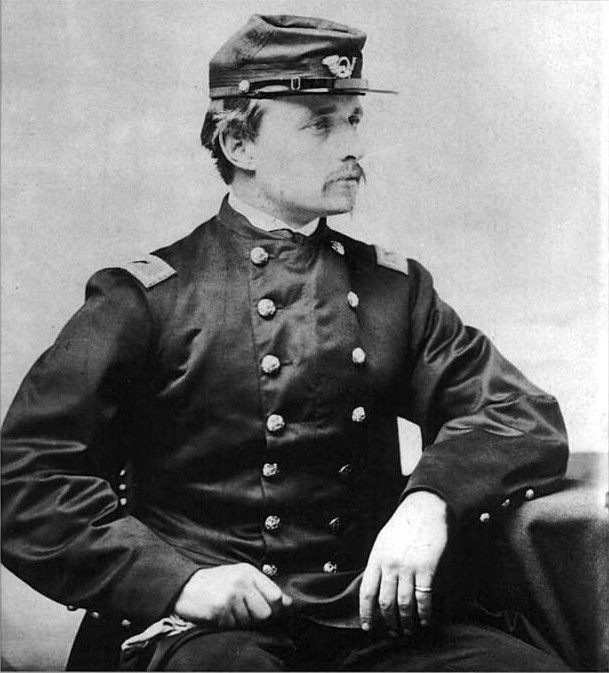
Glory is a film based on the historical events of the civil war (1861-1865) , the experiences of the first all-black infantry (the 54th regiment),and its commanding officer Robert Gould Shaw. (Played by Matthew Broderick).This film was made in 1989, produced by Freddie Fields, written by Kevin Jarre, and directed by Edward Zwick.The starring cast included Matthew Broderick as Robert Shaw, Denzel Washington as escaped slave “Trip,”Cary Elwes as Cabot Forbes – second in command, and Morgan Freeman as grave digger turned volunteer- John Rawlins (also a fictitious character.)Glory was a feature film drama with a mega budget of $18,000,000.00 dollars.Glory is a historical dramatic feature film that allows the viewer to learn about history of the civil war and the experiences of the first black regiment on the big screen.This method of learning history is an alternative to the traditional books of history because it involves many of the other senses such as hearing, visual, and emotions.“To see the past.To watch history unfold before our eyes.To have a machine that lets us view the deeds of our forebears and the major events that shaped our world.Such a desire no doubt precedes the invention by Louse and Auguste Lumiere of that most elegant and revolutionary piece of equipment, the cinematograph.” (Rosenstone, 11)
The main issues of this era that were captured by the film were the emancipation and conflicting values between the union and the confederacy that led to the civil war and ultimately the recruitment of the first all-black regiment.There were many reasons for the American Civil War.Abraham Lincoln was just elected president and this upset the southern state because they felt the Republican party which Lincoln belonged to embodied anit-slavery motives because this is what their campaign was run on.The south no longer felt part of the Union of the existing states.There was a split of the Union that began on December 20, 1860.By February 1, 1861, the states of: South Carolina, Mississippi, Alabama, Florida, Louisiana, Georgia, and Texas all split from the union and created the Confederate States of America.Jefferson Davis, a Senator from Mississippi was elected as the confederacy’s president. (Duncan, 57)
Even though President Lincoln attempted to remedy the tension between the confederacy and the Union by stating in his inaugural address on March 4, 1861 that he had no intention on ending slavery or repealing the fugitive slave law, the confederacy attached Fort Sumter on April 12, 1861 and this began the civil war.This battle on Fort Sumter was also where the film Glory begins as it shows Robert Shaw as an infantry man marching up to battle with his regiment and the details of what that experience was like.Shaw after suffering minor shrapnel wound to the neck is found by grave digger, John Rawlins (played by Morgan Freeman).Even though John Rawlins is a fictitious fugitive- the scene seems to capture the true feeling of what civil war was like during those times.These details can be seen by the number of casualties, types of chaotic war strategies, and aftermath of dead bodies.Other details that made the film Glory very authentic were the authentic looking, re-created uniforms, artillery, and fighting location of open fields.“Glory is a good film to analyze for two reasons.First, because it has been received by academics and the press as an important and largely accurate portrayal of its topic.And second, because it stands as a model of the classic Hollywood or mainstream feature, the kind of film which utilizes self- effacing shots and seamless editing as it creates a self-contained, rational , and ‘realistic’ world on the screen in which the viewer seems to be looking directly through a window at events in the past.” (Rosenstone, 40)“Not only is it the first feature film to treat the role of Black soldiers in the American Civil War, but it is also one of the most powerful and historically accurate movies ever made about that war.” (Rosenstone, 40) As Shaw wakes up and looks up to see the light of the sun that is shaded by Rawlin’s face, this camera angle captures how close Shaw came to death as he “saw the light” of his life instead of the afterlife.
President Lincoln insisted that the civil war was not about slavery or the emancipation of the slaves.Instead, the civil war was about preserving the union.One of the reasons for this is because most whites were not interested in fighting to free blacks and lose their social position and status to blacks.There is a scene in the film that shows President Lincoln forbidding black to serve in the union army.This scene is shown in the film, Glory, as Robert Shaw makes the announcement to his regiment in the rain and reads the telegram out loud. President Lincoln said, “any black man serving in the Union army will face the penalty of death along with their commanding officer.” (show clip)Even though they were all facing possible death for their service this did not deter the black soldiers from wanting to fight and they all continued to stay.(Duncan, 69)
The confederacy didn’t forbid blacks to serve and readily used them as slaves for a number of serviced during the civil war.Some of these duties included: building forts, blacksmiths, laundresses, nurses, and armories.As the confederacy advanced further north, thousands of southern slaves working for the confederacy saw this as an opportunity to escaped and crossed union lines.At first, the Union did not know what to do with the newly escaped slaves that were abundant in number.However, later Lincoln declared any slaves who served the confederacy during the civil war was considered “contraband of war” and declared free by the Union.This law was a result of the Second Confiscation and Militia Act passed by congress on July 17, 1862, which freed slaves who had masters in the Confederate Army.On July 22, 1862, President Lincoln presented a draft of the Emancipation Proclamation to his cabinet.After the Union Army turned back the first invasion of the North at Antietam, MD did Lincoln formally accept black soldiers to legally serve during the civil war.What influenced Lincoln’s change of heart was hearing how the 54th regiment of all black soldiers fought so bravely and suffered such mass casualties for the cause of the Union.(Duncan, 78)
Draft of Emancipation Proclamation (U S Archive)
The character in the film, Glory, which most embodied this newly escaped slave and their experiences was, Trip (played by Denzel Washington.)Trip was a run-away slave who decided to enlist in the Army of the 54th battalion, probably because he didn’t have anywhere else to go and didn’t know where or how to get food.There is a scene in the film where Trip is caught as he goes outside of army lines while enlisted to indulge in some tempting soul food.As a punishment, he is shown being whipped by his superior officers.As Trip’s shirt is removed, scars from previous whippings were shown on his back.This is a powerful scene in the film because it shows how much the slave had suffered and what he was willing to sacrifice for freedom. Trip stand still in humiliation as he accepts his punishment by standing idly as a single tear runs down his cheek.
By the end of the civil war over 178,000 black men served and many received high honors and served as commissioned officers.The first black man to receive a medal of honor during the civil war was Sargent William Carney of New Bedford, MA for the most distinguished gallantry in action during the assault of Fort Wagner, South Carolina on July 18, 1886.Carney was shot and crawled uphill on his knees holding the Union flag for his troops to follow. (Duncan, 93)
William Carney’s 54th Regiment Card (American US Archives)
This scene was recreated in the film Glory in the end of the film where John Rawlings (Morgan Freeman) fell holding the union flag and Trip (Denzel Washington) picked the flag up and proceeded to lead the regiment on (Battle at Fort Wagner).In the film, John Rawlins was the first to be promoted as the first black commanding officer.The feeling of pride was recaptured in this scene as John Rawling humbly accepted.
Black men serving during the civil war were treated differently from white soldiers and experienced much discrimination and mistreatment.“Amazingly, Glory released in 1989 was the first feature film to treat black soldiers during the civil war…A second reason for using feature films is that many of them focus on the two historic processes of race relations that have shaped the modern world: slavery and the great encounter between Western Europeans and indigenous peoples.” (Loewen, 82) Many felt that they were not fit to serve and used them mostly for manual labor.This mistreatment was show in the film Glory as the soldiers were used at first to cut wood and build fortresses.They had to constantly ask the permission to see battle.This was dramatized in the film where Shaw threatened his commanding officers Charles Garrison and James M. Montgomery.In this scene Shaw threatens to expose them for the illegal things they have done during the war such as attach helpless towns where only women, slaves, and children, were present, looting, and profiting from their tactics to the War Department.Blacks were also paid less than white soldiers.Whites were paid $13 a month to serve while blacks were paid only $7 and money was deducted for clothing allowances.It wasn’t until June 1864 when Private Sylvester Ray of the 2nd U.S. colored Calvary sent to trial because he refused to accept pay that was not equal to white officers.This scene was re-enacted in the film Glory as the regiment tears up their pay cards and demands equal pay or no pay.Congress did
eventually grant equal pay to the U.S. black troops. (Ray’s Increased Pay Card – American Archive)
The American Civil war was an historical event which parts were re-enacted of the experiences of Robert Shaw and the 54th regiment in the film Glory.The thesis of the film is that everyone has their reason to fight.Even though the civil war did not initially start to free the slave, in the end it ultimately did.I believe the main point of the movie is everyone has a cause that they are willing to die for.For the blacks at the time during the civil war it was freedom.For the whites it was the Union of the states or the values of the south (confederate army).The confederates did not want to lose their way of life which included slave labor.Change is scary, but everyone has to choose their battles in life;” is it worth fighting for?” Is the question you have to ask yourself when you make important choices in life? For Robert Shaw and the 54th regiment, it was worth the fight for them.And for their bravery and legacy, they will always be remembered as a huge part of American history.There is a monument which was built for Robert Shaw’s contribution to his country and a website which features all of his many accomplishments.