Monday, March 14, 2011

The Good Fight

Film Title: The Good Fight
Original Year of Production: 1984
Studio: National Endowment for the Humanities
Director: Noel Buckner, Mary Dore, Sam Sills
Cast: Studs Terkel-Narrator, Bill Bailey, Ruth Davidow, Salaria Key, Bill Macarthy, Milt Wolf
Producers: Noel Buckner, Mary Dore, Sam Sills
            The Good Fight is a documentary film that was made in 1982.  This film was directed by Noel Burkner and Mary Dove and written by Noel Buckner.  This documentary film interviewed the real live participants and survivors of the Abraham Lincoln Brigade, an anti-fascist group of volunteer soldiers who went to Spain to help fight against the fascist movement during WWII. 
The film’s thesis is the struggle to fight Fascism.  Fascism was a new type of ideology, whose base belief is that the Nordic race had a right to rule and dispose of other racial groups because they were believed to be inferior.   At the time, America did not want to get involved in the fight against Fascism and forbade Americans to support the non-Fascist countries like Italy whose people were attempting to fight against their leader, Benito Mussolini.  Fascism is described by Smith in the book, Europe in the Contemporary World as, “Fascism did not have an elaborate ideology; it was about seizing and using state power.  A country of extremes with severe rural poverty and thriving modern businesses such as the automobile industry coexisting side by side, Italy welcomed Mussolini’s promise to achieve unity and his vow to overcome the contradictions of modernity.” (Smith, 218)
Even though the American government forbade their citizens to get involved in the Fascist revolution overseas, many felt they had to do whatever they could to stop the spread of it.  Other countries like France couldn’t successfully win such a fight because of the male feminism of their culture. “..in a prewar France obsessed with the issue of male weakness.  These anxieties, which undermined deliberate and purposeful action and which were to play a key psychological role, both in Franc’s failure to resist the advancing German army and in its ready acceptance of Petainism.” (Bates, 26)  These survivors, who ventured on their own to fight Fascism, were interviewed about their experience more than 50 years later after the historical incident.  This documentary was in a very different style than a historical film.  Rosenthal distinguishes the differences between a documentary and a historical film as this, "The documentary directly reflects the world, possessing what has been called an indexical relationship to reality- which means it shows us what once was there, in front of the camera, and in theory, what would have been there anyway were no camera present.  This is opposed to the dramatic film which must elaborately set up a stage a world that is then filmed specifically for the camera. (70, Rosenthal).
     Some of the interviewees were Bill Baily, (U-tube link to interview)


Milt Wolf, Able Osheroff, Tome Page, and Ruth Davidow.  Many photographs and newspaper articles were shown to support the historical event of their experiences. (following is a clip of some of the interviewed survivors of the historical incident)
http://www.youtube.com/watch?v=URtWFEKHsvs

     This documentary is filmed as an interactive documentary where the interviews of the Abraham Lincoln Brigade was mixed with footage of historical documents and the survivors were able to tell their own story.  The thesis of this film was brought out by the diversity of the interviewees: American from different backgrounds and walks of life were willing to venture out and help fight Fascism because it did not agree with their American, democratic ideals.  Documentaries are also subject to interpretation and perspective.  As in the The Good Fight only the perspective of the people involved in the Abraham Lincoln Brigade were interviewed.  Other perspectives may have had very different things to say, such as these people committed treason to America by disobeying the laws forbidding them to go to Italy to help the peoples’ cause.  “What we don’t learn is equally significant.  Leftist politics, other than the generalized anti-fascism, is absent from The Good Fight.  We are never told that the International Brigades were organized and directed by the Comintern, and dominated by officials from the Communist Party.” (Rosenstone, 81)
  
     This documentary seems very historically accurate because everyone interviewed had photographs to show their participation in Italy.  The main turning point in the documentary is when the Brigade ran out of ammunition and supplies.  People in America campaigned for the embargo on supplies to Europe be lifted, however it was unsuccessful.  This film showed that during this period in history, Fascism was a real and intimidating threat which could have taken over the world.  if it wasn't for the brave efforts of the Abraham Lincoln Brigade.

October


Film Title: October: Ten Days that Shook the World
Original Year of Production: 1928
Studio: Sovkino
Director: Grigori Aleksandrov, Sergei M. Eisenstein
Cast: Valdamir Popov as Aleksander Kerensky, Vasili Nikandrov as V.I. Lennin Layaschenko as Konovaloz      

October: Ten Days that Shook the World is a silent, dramatic feature film that was produced by the Soviet Government documenting the Russian Revolution of 1917.  This event is very similar to the events that have recent taken place in Egypt and Libya.  In both instances the people in those countries resorted to uprising because they are very dissatisfied with the monarchy and bourgeoisie style of government and wish to have more rights; desiring more democracy.  Russia in 1917 was lead by the Czar, Nicolas II.  The citizens were suffering both economically as socially.  Mass poverty was epidemic and people were recruited into the peasant army that did not pay.  The people could not get ahead financially.  “Conditions in rural areas were also grim, especially the enormous loss of agriculture man power due to the primary peasant army raised by the state.  Industrial workers were in too short supply in Russia to be sent to the front.  Because the economy was transformed to eliminate the production of civilian goods, peasants had little incentive to produce.” (Smith, 148)  The moral of the people was very low because Russia was involved with many wars both in Manchuria against the Japanese in 1905 and fought in WWI.  People were tired of war and wanted a positive change. “The breakdown in support for the war was most consequential in Russia, for it led to the Russian Revolution of 1917 and the first dramatic series of collapses in monarchial rule across Europe.” (Smith, 147)
            The first uprising was successfully taken over by the provisional government which was headed by Kerensky.  However, Kerensky was unprepared to deal with the nature of Russia’s financial and social problems.  As a result, Lenin led the Bolshevicks into power over the Provisional government.  “Lenin’s agitation succeeded in tearing the fragile revolutionary coalition apart.  “We recognize that power must belong only to the people itself, i.e., to the Soviet Workers and Soldiers’ Deputies as the sole institution of authority enjoying the confidence of the people.” (Smith, 150)  The film, October, captures the power struggle between Lenin’s Bolshevik Group and Kerensky’s provisional government. 
There are many metaphors depicted in the film, October.  There are many scenes of the Bolshevicks tearing down huge statues of religious figures.  This is symbolic of the tearing down of the old monarchy/bourgeoisie and proletariat governments.  (clip of scene)


http://www.youtube.com/watch?v=EuBdQqemxPs&feature=related

“Through a reversal to focus on individuals, radical editing techniques (four times as many cuts as in the standard film of the time, and overt visual metaphors (a screen full of raised sickles represent the peasantry; raised riffles stand in for the army; turning wheels mean a motorcycle brigade; a statue being torn down indicates that fall of the Czar; the same statue reassembling itself suggests the provisional government has taken over the role of Czar.” (Rosenstone, 15)  These metaphors are similar to the “Omens” discussed in the article, Omen and Image; Presage and Sacrifice in Moravia’s La Ciociara. “In La Ciociar Moravia provides omens and premonitions throughout the narrative to prepare the reader for the tragedies to come for the mother and daughter protagonists Cesira and Rosetta.  At the same time and just consistently, he individualized the daughter metaphorically and through imagery both as a sacrificial lamb and scapegoat who is bound for tragedy (Kozoma-Southhall, 207) Another scene that used symbols and metaphors was the Bridge scene that had a white horse connected to it.  As the bridge slowly was raised, the dead white horse was hanging by a rope and then finally fell into the water below.  This dead white horse is symbolic of the failing government. (clip of scene below)


There are many invented scenes in the film, October.  This gives evidence that this film serves as a propaganda film.  “Three years later, his film to honor the tenth anniversary of the Bolshevik Revolution, October (1928)- for all its invented interludes such as the storming of the Winter Palace- stayed close to the details of the so-called Ten Days That Shook the World, even as it downplayed the contribution of both Lenin and his party.” (Rosenstone, 14)  Another clue that hints October as being a propaganda film is that it is much more focused on Kerensky and has a much stronger bias towards the Provisional Government.  These scenes showing the Provisional government being aggressively attacked and losing to a massive, mob-like group who are shown laughing horrifically as the city is being destroyed.  “Initially Sorin dismisses October as no more than propaganda.” (Rosenstone, 22)  Lenin’s involvement was highly downplayed in the film.
This movie, October produced by the Russian government had a very different perspective from the book October that was written by John Reed which is more biased towards the Communists.  Lenin comments on the book, “With the greatest interest and with never slacking attention I read John Reed’s Book, Ten Days That Shook the World.  Unreservedly do I recommend it to the workers of the world.  Here is a book which I should like to see published in millions of copies and translated into all languages.  It gives a truthful and most vivid exposition of the events so significant to the comprehension of what really is the Proletarian Revolution and the Dictatorship of the Proletariant.   These problems are widely discussed, but before one reject these ideas he must understand the full significance of this decision.  John Reed’s book will undoubtedly help to clear this question, which is the fundamental problem of the international labor movement.” (Lenin, 1)  This shows that history can be interpreted in several different ways depending on perspective.
In this way October is also an innovative film whose thesis is that people will resort to an uprising if they are not happy with their government.  Since the film came out on the tenth anniversary of the revolution, it’s as if the government is saying “look at how far we’ve come-the positive changes you fought for are here.” “One can also see innovative historical as part of a search for a new vocabulary in which to render the past on the screen, an effort to make history (depending on the film) more complex, inntorogative, and self conscious." (Rosenstone, 50)

Glory

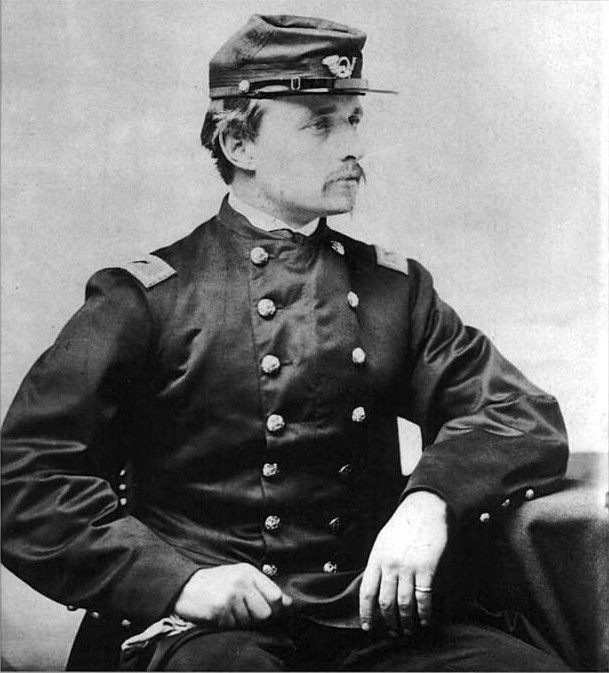
Glory is a film based on the historical events of the civil war (1861-1865) , the experiences of the first all-black infantry (the 54th regiment),and its commanding officer Robert Gould Shaw. (Played by Matthew Broderick).  This film was made in 1989, produced by Freddie Fields, written by Kevin Jarre, and directed by Edward Zwick.  The starring cast included Matthew Broderick as Robert Shaw, Denzel Washington as escaped slave “Trip,”  Cary Elwes as Cabot Forbes – second in command, and Morgan Freeman as grave digger turned volunteer- John Rawlins (also a fictitious character.)  Glory was a feature film drama with a mega budget of $18,000,000.00 dollars.  Glory is a historical dramatic feature film that allows the viewer to learn about history of the civil war and the experiences of the first black regiment on the big screen.  This method of learning history is an alternative to the traditional books of history because it involves many of the other senses such as hearing, visual, and emotions.  “To see the past.  To watch history unfold before our eyes.  To have a machine that lets us view the deeds of our forebears and the major events that shaped our world.  Such a desire no doubt precedes the invention by Louse and Auguste Lumiere of that most elegant and revolutionary piece of equipment, the cinematograph.” (Rosenstone, 11)
File:Robert Gould Shaw.jpg
The main issues of this era that were captured by the film were the emancipation and conflicting values between the union and the confederacy that led to the civil war and ultimately the recruitment of the first all-black regiment.  There were many reasons for the American Civil War.  Abraham Lincoln was just elected president and this upset the southern state because they felt the Republican party which Lincoln belonged to embodied anit-slavery motives because this is what their campaign was run on.  The south no longer felt part of the Union of the existing states.  There was a split of the Union that began on December 20, 1860.  By February 1, 1861, the states of: South Carolina, Mississippi, Alabama, Florida, Louisiana, Georgia, and Texas all split from the union and created the Confederate States of America.  Jefferson Davis, a Senator from Mississippi was elected as the confederacy’s president. (Duncan, 57)
Even though President Lincoln attempted to remedy the tension between the confederacy and the Union by stating in his inaugural address on March 4, 1861 that he had no intention on ending slavery or repealing the fugitive slave law, the confederacy attached Fort Sumter on April 12, 1861 and this began the civil war.  This battle on Fort Sumter was also where the film Glory begins as it shows Robert Shaw as an infantry man marching up to battle with his regiment and the details of what that experience was like.  Shaw after suffering minor shrapnel wound to the neck is found by grave digger, John Rawlins (played by Morgan Freeman).  Even though John Rawlins is a fictitious fugitive- the scene seems to capture the true feeling of what civil war was like during those times.  These details can be seen by the number of casualties, types of chaotic war strategies, and aftermath of dead bodies.  Other details that made the film Glory very authentic were the authentic looking, re-created uniforms, artillery, and fighting location of open fields.  “Glory is a good film to analyze for two reasons.  First, because it has been received by academics and the press as an important and largely accurate portrayal of its topic.  And second, because it stands as a model of the classic Hollywood or mainstream feature, the kind of film which utilizes self- effacing shots and seamless editing as it creates a self-contained, rational , and ‘realistic’ world on the screen in which the viewer seems to be looking directly through a window at events in the past.” (Rosenstone, 40)  “Not only is it the first feature film to treat the role of Black soldiers in the American Civil War, but it is also one of the most powerful and historically accurate movies ever made about that war.” (Rosenstone, 40) As Shaw wakes up and looks up to see the light of the sun that is shaded by Rawlin’s face, this camera angle captures how close Shaw came to death as he “saw the light” of his life instead of the afterlife.
http://www.youtube.com/watch?v=GBD-5acfz8E&feature=related
President Lincoln insisted that the civil war was not about slavery or the emancipation of the slaves.  Instead, the civil war was about preserving the union.  One of the reasons for this is because most whites were not interested in fighting to free blacks and lose their social position and status to blacks.  There is a scene in the film that shows President Lincoln forbidding black to serve in the union army.  This scene is shown in the film, Glory, as Robert Shaw makes the announcement to his regiment in the rain and reads the telegram out loud. President Lincoln said, “any black man serving in the Union army will face the penalty of death along with their commanding officer.” (show clip)  Even though they were all facing possible death for their service this did not deter the black soldiers from wanting to fight and they all continued to stay.(Duncan, 69)

                                   
The confederacy didn’t forbid blacks to serve and readily used them as slaves for a number of serviced during the civil war.  Some of these duties included: building forts, blacksmiths, laundresses, nurses, and armories.  As the confederacy advanced further north, thousands of southern slaves working for the confederacy saw this as an opportunity to escaped and crossed union lines.  At first, the Union did not know what to do with the newly escaped slaves that were abundant in number.  However, later Lincoln declared any slaves who served the confederacy during the civil war was considered “contraband of war” and declared free by the Union.  This law was a result of the Second Confiscation and Militia Act passed by congress on July 17, 1862, which freed slaves who had masters in the Confederate Army.  On July 22, 1862, President Lincoln presented a draft of the Emancipation Proclamation to his cabinet.  After the Union Army turned back the first invasion of the North at Antietam, MD did Lincoln formally accept black soldiers to legally serve during the civil war.  What influenced Lincoln’s change of heart was hearing how the 54th regiment of all black soldiers fought so bravely and suffered such mass casualties for the cause of the Union.  (Duncan, 78)


Draft of Emancipation Proclamation (U S Archive)
The character in the film, Glory, which most embodied this newly escaped slave and their experiences was, Trip (played by Denzel Washington.)  Trip was a run-away slave who decided to enlist in the Army of the 54th battalion, probably because he didn’t have anywhere else to go and didn’t know where or how to get food.  There is a scene in the film where Trip is caught as he goes outside of army lines while enlisted to indulge in some tempting soul food.  As a punishment, he is shown being whipped by his superior officers.  As Trip’s shirt is removed, scars from previous whippings were shown on his back.  This is a powerful scene in the film because it shows how much the slave had suffered and what he was willing to sacrifice for freedom. Trip stand still in humiliation as he accepts his punishment by standing idly as a single tear runs down his cheek.
By the end of the civil war over 178,000 black men served and many received high honors and served as commissioned officers.  The first black man to receive a medal of honor during the civil war was Sargent William Carney of New Bedford, MA for the most distinguished gallantry in action during the assault of Fort Wagner, South Carolina on July 18, 1886.  Carney was shot and crawled uphill on his knees holding the Union flag for his troops to follow. (Duncan, 93)


                      William Carney’s 54th Regiment Card (American US Archives)
 This scene was recreated in the film Glory in the end of the film where John Rawlings (Morgan Freeman) fell holding the union flag and Trip (Denzel Washington) picked the flag up and proceeded to lead the regiment on (Battle at Fort Wagner).  In the film, John Rawlins was the first to be promoted as the first black commanding officer.  The feeling of pride was recaptured in this scene as John Rawling humbly accepted.

http://www.youtube.com/watch?v=4Eg0KMOofEY&feature=related

http://www.youtube.com/watch?v=56iuVp44Z0w
Black men serving during the civil war were treated differently from white soldiers and experienced much discrimination and mistreatment.  “Amazingly, Glory released in 1989 was the first feature film to treat black soldiers during the civil war…A second reason for using feature films is that many of them focus on the two historic processes of race relations that have shaped the modern world: slavery and the great encounter between Western Europeans and indigenous peoples.” (Loewen, 82) Many felt that they were not fit to serve and used them mostly for manual labor.  This mistreatment was show in the film Glory as the soldiers were used at first to cut wood and build fortresses.  They had to constantly ask the permission to see battle.  This was dramatized in the film where Shaw threatened his commanding officers Charles Garrison and James M. Montgomery.  In this scene Shaw threatens to expose them for the illegal things they have done during the war such as attach helpless towns where only women, slaves, and children, were present, looting, and profiting from their tactics to the War Department.  Blacks were also paid less than white soldiers.  Whites were paid $13 a month to serve while blacks were paid only $7 and money was deducted for clothing allowances.  It wasn’t until June 1864 when Private Sylvester Ray of the 2nd U.S. colored Calvary sent to trial because he refused to accept pay that was not equal to white officers.  This scene was re-enacted in the film Glory as the regiment tears up their pay cards and demands equal pay or no pay.  Congress did
eventually grant equal pay to the U.S. black troops.  (Ray’s Increased Pay Card – American Archive)
The American Civil war was an historical event which parts were re-enacted of the experiences of Robert Shaw and the 54th regiment in the film Glory.  The thesis of the film is that everyone has their reason to fight.  Even though the civil war did not initially start to free the slave, in the end it ultimately did.  I believe the main point of the movie is everyone has a cause that they are willing to die for.  For the blacks at the time during the civil war it was freedom.  For the whites it was the Union of the states or the values of the south (confederate army).  The confederates did not want to lose their way of life which included slave labor.  Change is scary, but everyone has to choose their battles in life;” is it worth fighting for?” Is the question you have to ask yourself when you make important choices in life? For Robert Shaw and the 54th regiment, it was worth the fight for them.  And for their bravery and legacy, they will always be remembered as a huge part of American history.   There is a monument which was built for Robert Shaw’s contribution to his country and a website which features all of his many accomplishments.
 http://skylinerfan.angelcities.com/page10b.html